AWS's New AI Coders: Will They Finally Fix My Deployments?
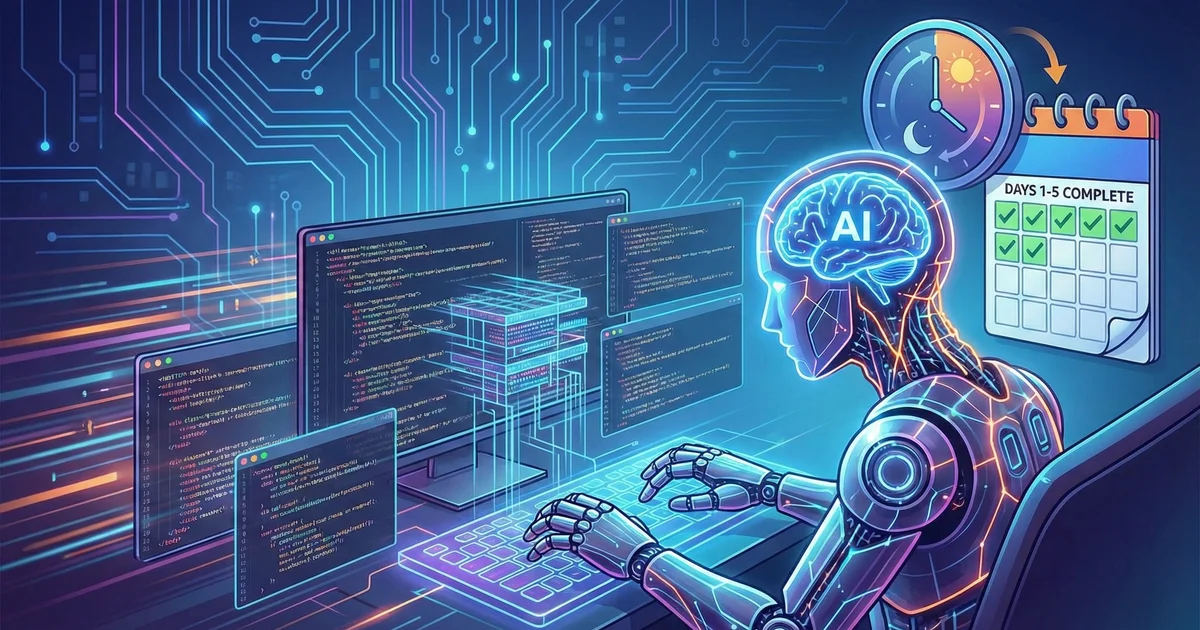
Picture this: It’s 2 AM, you’re knee-deep in a Kubernetes manifest that’s more tangled than Christmas lights in July, and your coffee’s gone cold. Enter AWS’s latest brainchild. AI agents that don’t just suggest code fixes; they write the darn thing, test it, and shove it into production. Announced at re:Invent 2025 (because of course it was), these bad boys are here to make DevOps feel less like herding cats and more like… well, watching cats code for you.
If you’re in the trenches of deployments or automation, this is either your new best friend or the robot uprising’s opening act. Spoiler: I’m leaning best friend, with a side of “please don’t take my job, HAL.”
What Are These AI Agents, Anyway? (The Non-Skynet Version)
AWS calls them Amazon Q Developer Agents think of them as supercharged sidekicks for your IDE, but with autonomy levels cranked to 11. Powered by the freshly minted Amazon Bedrock Agents (now with extra multimodal smarts), these agents can:
- Autonomously code: You say, “Build me a Lambda function that scales like my coffee addiction,” and poof, it spits out optimized Python, Node.js, or whatever flavor you’re craving.
- Debug like a pro: Spotting that sneaky null pointer? It’ll trace it, suggest fixes, and PR the patch. No more “works on my machine” excuses.
- Test and deploy: Integrates with CodeBuild, CodeDeploy, and even your CI/CD pipelines to run unit tests, integration checks, and roll out zero-downtime updates. Because who has time for manual smoke tests?
The magic sauce? They’re built on AWS’s foundation models (like Anthropic’s Claude Sonnet 4.5, now fine-tuned for code), with guardrails to avoid hallucinating your entire backend into oblivion. Early demos showed an agent refactoring a monolithic Node.js app into microservices in under 10 minutes, faster than I can find my reading glasses.
As AWS CTO Werner Vogels quipped in the keynote: “Developers shouldn’t be babysitting code; they should be building dreams.” (Cue applause and a few skeptical eye-rolls from the SRE crowd.)
How It Works (Without the PhD in ML)
Under the hood, it’s a slick loop of plan-act-observe-reflect:
- You kick it off: Natural language prompt in VS Code, JetBrains, or the AWS Console – “Optimize this deployment for high traffic.”
- Agent plans: Breaks it down into tasks (e.g., “Scale replicas, add HPA, tweak ingress”).
- Acts: Generates code snippets, configs, or even full manifests. For our Node.js friends from last week’s guide? It could auto-Dockerize and Kube-ify your app with health checks baked in.
- Observes: Runs tests via AWS services – think CodeWhisperer on steroids, but with real execution.
- Reflects: If it breaks (because AI, amirite?), it iterates. No infinite loops here; there’s a human-in-the-loop option for the paranoid.
Bonus: Multimodal support means it can “read” diagrams, screenshots of errors, or even your handwritten napkin sketches (okay, maybe not that last one… yet).
And integration? Seamless with GitHub, GitLab, and your existing pipelines. Want it to collab with your team? It can even generate commit messages funnier than mine.
The Good, The Hype, and The “Wait, What?” Moments
The Good: This could slash deployment times from days to hours, especially for infra-as-code drudgery. Imagine AI agents handling those rote Kubernetes YAML tweaks while you sip eggnog. Observability? It’ll suggest Prometheus queries tailored to your stack. Trading side-hustle? Bonus, it can whip up quick scripts for market data pulls.
The Hype: AWS promises “10x productivity,” but let’s be real, that’s marketer math. Early adopters (think fintech firms stress-testing it on trading bots) report 3-4x gains. Still, revolutionary? Absolutely. World-ending? Nah, more like a really smart intern who doesn’t ghost you on Fridays.
The “Wait, What?”: Security folks are already side-eyeing the “autonomous” bit. What if it deploys a backdoor because it misread your prompt? (AWS swears by their responsible AI framework, with audit logs galore.) And cost? Starts at $0.01 per 1K tokens, but chain a few agents on a complex deploy, and your bill might rival a bad crypto trade.
Humor break: My first test prompt was “Fix my CI/CD so it doesn’t fail on green builds.” The agent replied: “Done. Also, your coffee script has a leak, want me to patch that too?”
DevOps Takeaways (Because I’m That Guy)
Tying this back to real-world grinds:
- Start small: Use it for boilerplate. Dockerfiles, env configs, basic health checks. (Pro tip: Feed it last week’s Node.js guide for instant K8s manifests.)
- Guardrails first: Enable human approval gates for prod deploys. Trust, but verify.
- Monitor the monitor: These agents log everything, hook ‘em to your observability stack for meta-insights (AI watching AI? Inception much?).
- Upskill, don’t slack: Learn prompt engineering. It’s the new SQL. Or use Convex.
- Hybrid heaven: Pair with tools like Terraform or ArgoCD for that sweet human-AI symphony.
If you’re knee-deep in AWS, sign up for the preview now. It’s GA-ing Q1 2026, but early birds get the shiny toys.
Final Thought (With a Wink)
AWS’s AI agents aren’t here to replace us; they’re here to make us better at the fun parts, architecting, innovating, and occasionally debugging the AI when it tries to deploy cat memes to prod.
In a world where code writes itself, maybe we’ll finally have time for that “Personal” blog category I’ve been neglecting. Or, you know, pray about it. Either way, the future’s looking automated… and a little hilarious.
Stay prompt, friends. What’s your first AI agent task?
P.S. If this thing starts trading stocks autonomously, call me. We need to talk. 😏
// RELATED_ARCHIVES

> Nov 2025 · 9 min read
Claude Opus 4.5: My New Coding Sidekick
Anthropic's Opus 4.5 crushes coding benchmarks and slashes costs—finally, an AI that ships code without the drama.
> Nov 2025 · 5 min read
Google Just Dropped Antigravity – The IDE That Literally Defies Physics (and My Coffee Addiction)
Google’s new “agent-first” IDE powered by Gemini 3 is here, and it’s so autonomous my code now writes itself while I stare at the ceiling. First impressions from a very confused DevOps guy.
> Feb 2026 · 5 min read
Anthropic Unleashes Claude Opus 4.6 – Agents & Coding Level Up, No Price Hike
Anthropic's latest Opus upgrade brings 1M context, smarter agents, epic coding boosts, and more – all while keeping your wallet happy. Let's unpack the goodies.