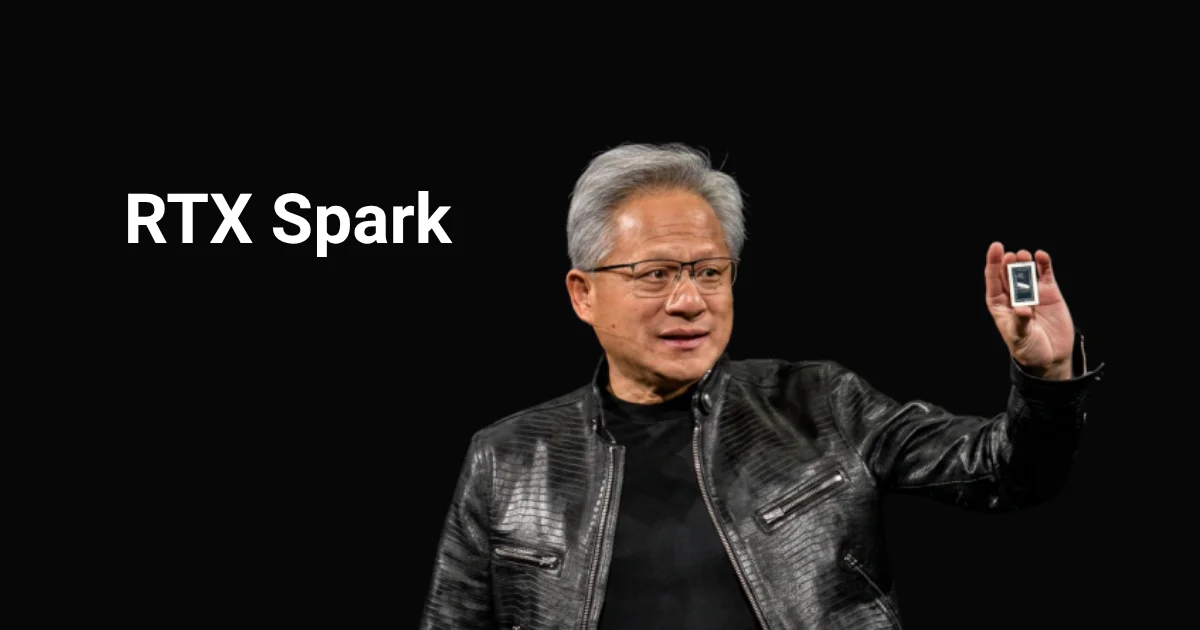
NVIDIA RTX Spark: Laptops Become AI Teammates (Finally?)
Today NVIDIA decided the world needed another “superchip.” Meet RTX Spark — the fusion of Blackwell RTX graphics and ultra-efficient Arm CPU cores squeezed into the slimmest laptops and smallest desktops you’ve ever seen. Their slogan? “Your PC just went from tool to teammate.”
I laughed. Then I realized I might actually want one so my laptop can write half my K8s config while I’m being lazy and pretend to be productive.
What Exactly Is RTX Spark?
It’s NVIDIA’s first proper System-on-Chip (SoC) play for Windows PCs. Think of it as the portable cousin of their DGX Spark mini AI workstation, but built for real people who like battery life and don’t want to carry a server in their backpack.
Key specs that made me raise an eyebrow:
- Up to 6,144 Blackwell RTX GPU cores
- Up to 20-core ultra-efficient CPU (yes, Arm-based — NVIDIA + MediaTek magic)
- Up to 1 petaflop FP4 AI performance
- Up to 128 GB unified memory
- All-day battery life (NVIDIA’s words, not mine — we’ll believe it when we see it)
- Full CUDA stack running natively
In plain English: this thing can run serious local AI models, generate assets on demand, ray-trace your 3D renders, and still have juice left to play the latest games at 1440p without melting your knees.
Why Should DevOps & Software Folks Care?
Because “local AI agents” is no longer marketing fluff.
With native CUDA on an efficient SoC, you can finally:
- Prototype and fine-tune models without lighting your cloud bill on fire
- Run AI agents that actually help with code, tests, or even boring deployment scripts
- Do inference and simulation work on the go (hello, airport DevOps warriors)
- Keep sensitive data off the public internet
Imagine telling an AI agent: “Review this PR, spin up a canary in staging, and wake me if the error rate goes above 0.1%.” A bit sci-fi today, but RTX Spark hardware is exactly what makes that less ridiculous tomorrow.
Of course, we’ve heard “AI teammate” promises before. Usually the teammate turns out to be that one intern who breaks prod at 4:55 pm on Friday. We’ll see.
Gaming & Creators Get Spoiled Too
Not everything has to be serious. The same chip promises:
- Proper RTX ray tracing + full DLSS suite
- NVIDIA Reflex & G-SYNC goodness
- 4:2:2 hardware encode/decode for video editors
- AV1 support for streamers who actually care about quality
So yes, you can fine-tune your Llama model in the morning and frag people in the evening without swapping machines. The dream.
The Humorous Reality Check
NVIDIA says this is “the most efficient PC chip ever built.” I love the confidence. We said the same thing about the last three generations of hardware that still needed a power brick the size of a toaster.
Will the battery life actually be “all-day” while running local AI agents? I’ll reserve judgment until the first reviews drop and someone tries to run a 70B model while watching 4K YouTube at the same time.
Also, Windows on Arm + NVIDIA drivers. Historically that combo has been… let’s call it “character building.” Fingers crossed the ecosystem has matured.
DevOps Takeaways (Because We Can’t Help Ourselves)
- Local-first AI is becoming practical — less vendor lock-in, lower latency, better privacy.
- Hardware still matters — even in the cloud-native era, having the right silicon under your dev machine changes everything.
- Unified memory is the new hotness — 128 GB shared between CPU and GPU is going to make a lot of workflows feel magically faster.
- Watch your power budget — efficiency wins. The days of “just throw more GPUs at it” might be getting a reality check.
Final Thought
RTX Spark feels like NVIDIA saying: “Fine, you want AI everywhere? Here’s the hardware so you can stop begging hyperscalers for every little experiment.”
Whether it actually becomes the teammate we all secretly want (or the over-promising colleague we already have) remains to be seen. But for developers, creators, and anyone tired of trading battery life for performance, it looks like a very interesting step in the right direction.
I’ve already signed up for notifications. My current laptop is judging me.
Until next time — may your deploys be green, your models local, and your battery percentage stay above 40% when you need it most.
P.S. First RTX Spark laptops are expected later this year from Dell, Microsoft (Surface Laptop Ultra), Lenovo, HP, and friends. I’ll update this post once real-world benchmarks land (and once I stop giggling at the “teammate” marketing).
// RELATED_ARCHIVES
> Apr 2026 · 7 min read
Claude Mythos "Zero-Days": Hype, Sandbox-Off & OpenAI Déjà Vu
Anthropic’s shiny new model crushes benchmarks… but only after turning off the sandbox, stripping defenses, and using pre-known crashes. My skeptical thread just got visual proof. Classic AI-lab marketing or actual game-changer? Let’s dissect the fine print (with laughs).
> Apr 2026 · 9 min read
Claude Mythos Found 27-Year Bugs – Project Glasswing Drops
Anthropic just unleashed an AI that hunts zero-days better than most humans, partnering with Big Tech to patch the internet's oldest skeletons. Your Kubernetes cluster (and that Node.js app) just got a very smart bodyguard.

> Mar 2026 · 7 min read
NVIDIA NemoClaw: Taming Rogue AI Agents for Enterprise
OpenClaw agents were fun until they started deleting prod databases. NVIDIA NemoClaw adds the guardrails enterprises need – one command to safe, always-on AI assistants.