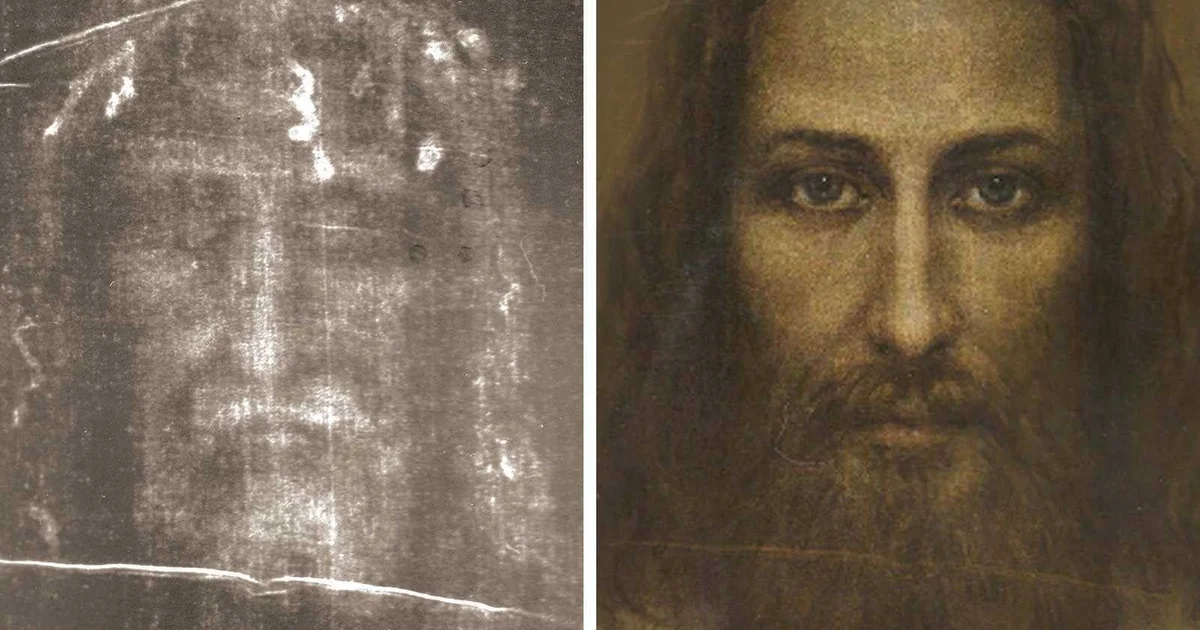
Shroud of Turin: Latest 2025-2026 Scientific Findings
The Shroud of Turin continues to draw serious scientific attention. In 2025 and 2026, new studies have examined DNA evidence, image formation theories, and the reliability of earlier carbon dating. These developments add detail to the ongoing discussion without providing final resolution.
Executive Summary
Research from the past two years has increased the complexity of the Shroud debate rather than settled it. The most notable advance is a comprehensive 2026 metagenomic DNA study. A peer-reviewed rebuttal has also addressed a recent bas-relief hypothesis for the image. At the same time, analysis of the 1988 radiocarbon raw data and alternative dating methods continue to question the medieval date. The cloth remains the most studied artifact in history, yet its origin and image formation stay open questions.
1. DNA Analysis — The Major 2026 Development
In March-April 2026, Dr. Gianni Barcaccia and colleagues at the University of Padua released a metagenomic study on bioRxiv. They reanalyzed samples taken in 1978 and 1988.
Key results include:
- DNA traces from at least 14 humans, 19 plant species, and various animals and microbes.
- Human lineages: 55.6% Near Eastern, 38.7% Indian, and under 5.6% European.
- Detection of haplogroup H33, common in Druze and other Near Eastern populations.
- Halophilic archaea indicating exposure to saline conditions, consistent with the Dead Sea region.
- Post-Columbian plant DNA (peppers, tomatoes, potatoes) confirming later contamination.
The study shows the Shroud as a genetic record of centuries of handling and travel. It confirms passage through the Middle East and supports the possibility of Indian-origin linen, but does not isolate original DNA or settle the age of the cloth. Mainstream scientists view the diversity as expected for a handled textile; proponents see it as evidence of a journey from the Holy Land.
2. Image Formation — Bas-Relief Hypothesis Rebutted and Radiation Theory Examined
In February 2026, Tristan Casabianca, Emanuela Marinelli, and Alessandro Piana published a detailed response in Archaeometry to Cicero Moraes’s 2025 bas-relief proposal.
Moraes had used 3D modeling to suggest the image resulted from contact with a low-relief sculpture rather than a body. The rebuttal points out several limitations:
- The model reproduces only the frontal image, not the dorsal.
- It reverses left and right orientations in feet and hands.
- It uses an incorrect body height and simulates cotton instead of linen.
- It overlooks the image’s extreme superficiality (approximately 2 microns deep) and the confirmed presence of blood.
- Historical context for such a medieval forgery is weak.
The critique weakens one specific medieval forgery explanation but does not prove the image came from a body.
The Shroud’s image is confined to the uppermost layer of linen fibers, roughly 2 microns deep, with no pigments, dyes, or artistic materials detected. It also encodes three-dimensional information based on distance from the body. These properties continue to point researchers toward mechanisms beyond ordinary contact or painting.
One leading explanation remains a brief, intense burst of radiation from within the cloth-wrapped body. This aligns with the observed superficial discoloration caused by oxidation and dehydration of the cellulose in the linen.
The ENEA Experiments and the 34 Trillion Watts Calculation
Between 2005 and 2010, Dr. Paolo Di Lazzaro’s team at the ENEA Research Centre in Frascati conducted controlled tests on small linen samples using excimer lasers that emit short pulses of vacuum ultraviolet (VUV) light. They successfully produced colorations matching key characteristics of the Shroud’s image:
- Extremely shallow depth (matching the 0.2-micron fiber involvement)
- Yellowish hue without fluorescence
- No scorching of the underlying fibers
To scale these results to the full human-sized image on the Shroud (approximately 4.4 meters by 1.1 meters, covering both frontal and dorsal views), the researchers calculated the required energy delivery. Their conclusion was that replicating the effect across the entire cloth would demand a power level of about 34 trillion watts (34 terawatts) of vacuum ultraviolet radiation.
This figure represents instantaneous power, not total energy. The pulse would need to be delivered in an extraordinarily short time—on the order of nanoseconds or less—to avoid burning the delicate linen. For context, modern high-power ultraviolet lasers operate in the range of billions of watts, far below the level required for a full-scale replica.
The ENEA work therefore adds quantitative weight to the radiation-burst theory without resolving the authenticity question.
3. Carbon Dating — Ongoing Controversy
The 1988 radiocarbon result (1260-1390 CE) is still accepted by most scientists. However, the release of the raw data after 28 years has revealed measurement inconsistencies. Critics argue the original publication should not have proceeded.
Alternative approaches now include:
- Wide Angle X-Ray Scattering (WAXS) by Dr. Liberato de Caro, suggesting an age of about 2000 years.
- Professor Giulio Fanti’s three independent mechanical and chemical methods, converging on 33 BC ± 250 years.
No new authorized destructive sampling has occurred, and the Vatican has not approved further tests. The debate therefore rests on re-examination of existing data.
Current State of the Debate
| Question | Mainstream View | Authenticity View |
|---|---|---|
| Age | 1260-1390 CE (1988 C-14) | ~2000 years (WAXS, Fanti) |
| Origin | Medieval France | 1st-century Jerusalem |
| Linen source | European | Indian (Sindh region) |
| Image formation | Medieval artistic technique | Unknown (possibly radiation/energy) |
| DNA evidence | Expected contamination | Confirms Middle Eastern passage |
| Blood | Pigment | Real human blood (AB type) |
What Remains Unresolved
- No consensus on the cloth’s age.
- Image formation mechanism still unexplained.
- DNA too contaminated for original genetic identification.
- Historical gap of more than 1,300 years before the first documented appearance in 1354.
- No new Vatican-approved sampling planned.
Bottom Line
The 2025-2026 research, led by the detailed 2026 DNA study, illuminates the Shroud of Turin as a silent witness to centuries of movement across cultures, regions, and hands. While the bas-relief rebuttal narrows certain forgery explanations, the ENEA radiation calculations highlight the extraordinary conditions required for the image, and the carbon-dating questions persist, the central mysteries endure: the true age of the cloth and the precise mechanism that formed its image.
For those who approach the Shroud through the lens of Christian faith, these findings do not demand proof but instead invite deeper reflection. The cloth stands as an enduring call to contemplate the suffering, death, and resurrection of Christ — realities that science can describe yet never fully explain. In a world that often seeks certainty, the Shroud reminds us that some truths are grasped not only by evidence but also by the quiet conviction of the heart. As further non-destructive studies unfold, may we continue to seek understanding with humility, holding both scientific inquiry and sacred tradition in respectful dialogue.
// RELATED_ARCHIVES

> Nov 2025 · 7 min read
Escaping to Doi Inthanon – Thailand's Roof and a Perfect Break from the Heat
A personal account of visiting Doi Inthanon National Park – the highest point in Thailand, stunning waterfalls, epic hikes, and why it's my go-to reset when Chiang Mai gets too sticky.

> Nov 2025 · 9 min read
Real Profitable HFT Market Making Lives or Dies by Infrastructure – The Brutal Truth
You can have the perfect Avellaneda-Stoikov model on paper. Without insane low-latency infrastructure it’s worthless. Here’s exactly what separates the million-dollar P&L from the academic toy.

> Nov 2025 · 7 min read
When Science and Faith Team Up
Have you ever looked at the stars and wondered if someone's behind it all? Let's see how science and faith actually work together, not fight.